This text has been translated from Norwegian with the assistance of GPT UiO. Article by Svein Harald Milde in News section of the Department of Psychology (link to original article)
The network is called "OrigoCogito". Its aim is to support and strengthen research collaboration that can reveal how early‑life factors influence brain health across the lifespan.
Need for lifespan data
– There are clear indications that early‑life factors, such as birthweight, pregnancy length and birth complications, have long‑term effects on the brain, says Kristine Beate Walhovd.
– Yet data on birth circumstances for many middle‑aged and older adults remain incomplete or paper‑based, and there is a general lack of digital cognitive data, particularly for women, she explains.
According to Walhovd, OrigoCogito will address this by building a national and Nordic network to digitalise and harmonise historical birth records, establish common protocols for cognitive testing and MRI, and develop digital databases and analytical tools, including the use of artificial intelligence for text recognition and brain data analysis.
The network includes partners in Norway, such as NTNU and Oslo University Hospital (OUS), as well as contacts in Sweden, Denmark and Finland. Walhovd adds that LCBC will, in the longer term, facilitate comparative studies across these countries.
The significance of early factors
She further notes that they aim to make better use of the opportunities offered by health registries and population studies in Norway and the Nordic region for lifespan research on the brain and cognition. The goal is to make it easier to link early‑life information with advanced brain imaging and detailed measures of cognitive function.
– Such connections can provide new insights into how birth risk factors, birthweight and pregnancy lenght affect cognitive function and the risk of cognitive impairment and dementia later in life, she says.
The Research Council of Norway’s network funding of NOK 2 million will, according to Walhovd, be used to establish and operate the OrigoCogito network at LCBC together with partners Professor Asta Håberg at NTNU, and Professors Atle Bjørnerud and Kyrre Emblem at the Centre for Radiology and Artificial Intelligence at Oslo University Hospital.
Promoting brain health
She reports that they plan to organise regular national and Nordic meetings and conferences during 2026 and 2027. They will hold monthly digital meetings, provide travel and support for PhD candidates and early‑career researchers, run digital communication channels, and develop shared digital tools, such as a standardised cognitive test battery and harmonised MRI protocols.
– This support gives LCBC a clear coordinating role in a national and Nordic network. It increases capacity for harmonisation and data sharing, builds competence among younger researchers through meetings and conferences, and lays the groundwork for larger international applications.
– The combination of registry data, MRI expertise and an interdisciplinary approach will help make LCBC internationally competitive in research on brain health across the lifespan, and over time enable the translation of findings into evidence‑based public health measures, Walhovd emphasises.

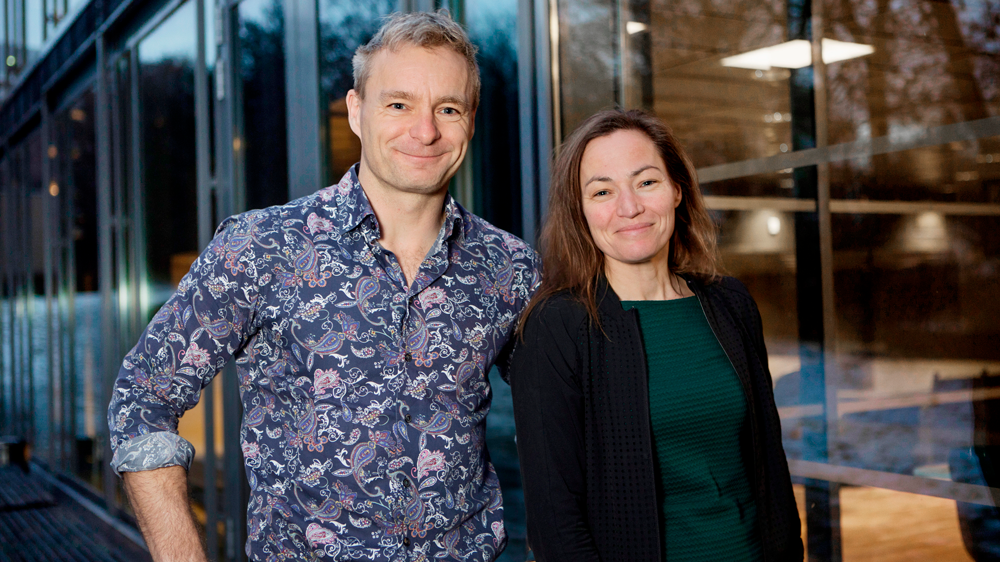
LCBC anno 2024. Photo: Øystein Horgmo/ UiO
The Research Council of Norway recently awarded network funding to 19 researcher networks to follow up disciplinary evaluations in the natural sciences, mathematics, ICT and medicine and health sciences. The latter took place from autumn 2023 to January 2024 under the abbreviation EVALMEDHELSE. The Department of Psychology (PSI), its divisions and centres, were included in that evaluation.
The Centre for Lifespan Changes in Brain and Cognition (LCBC) at PSI received the top score of 5, equivalent to Excellent, in the EVALMEDHELSE evaluation. The committee concluded that "LCBC is a true asset to the Norwegian research landscape".
This enabled LCBC to apply for the network funding from the Research Council of Norway (RCN). Kristine Beate Walhovd was LCBC’s centre director during the evaluation period and until August 2024. She was also the principal investigatr (PI) on the network‑funding application to RCN, which just got approved.